
How Bench Warrants Work in Grant County
A bench warrant is an order that pulls a person back before the court, usually after a missed appearance or another slip in compliance. Grant County sees them across a wide range of triggers. Form 9-212C lists FTA at an order or hearing, subpoena nonappearance, release-condition violations, release review or revocation, contempt, failure to pay after an order, probation or order noncompliance, first-offender-program FTA, and other facts. The label alone says little about the fix. The issuing court might set a new date, require a motion or payment, set bond, or expect an appearance, counsel, or surrender. Grant District Court carries felony and general criminal files, Magistrate I and II take lower-court matters, and municipal courts issue their own local bench warrants.
Form 9-212C Trigger Categories
The blank New Mexico Form 9-212C is a solid map of what a bench-warrant record can hold. Its blocks cover county, city, court, state or municipality, case number, defendant, charge, trigger, judge, clerk, system entry, release, and return or removal. A Grant County reader can see at a glance which fields matter.
| Record area | Examples in the blank form |
|---|---|
| Trigger | FTA, subpoena, contempt, nonpayment after order, probation, or release condition |
| Release | Bond, appearance, traffic payment, fine or cost payment |
| System record | Clerk entry and later removal information |
| Return | Arrest, release on bond or payment, date, signature, title |
Use the blank model, not a completed form, when asking a Grant County clerk for a public record; never publish one filled out or bearing private identifiers. The official Form 9-212C lays out the current schema.
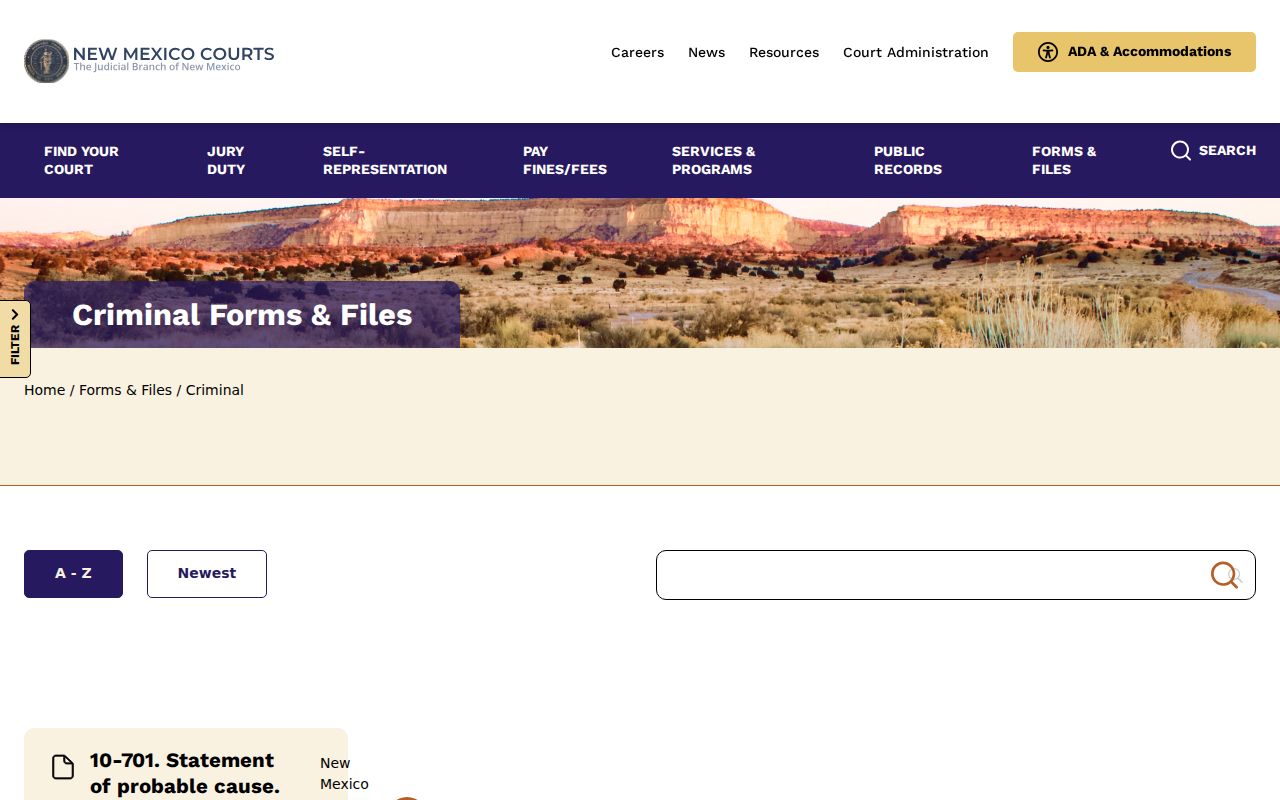
The forms frame shows record fields without reproducing a person’s warrant.
Grant County Bench Warrant Issuance
The Municipal Court Manual describes a bench warrant as a written order directing an authorized officer to arrest someone and bring them before the court. Judge knowledge, probable-cause material, notice, service, and the underlying case all shape what happens. One missed date does not tell a caller what the result will be. Find the docket through Case Lookup first. Then call the clerk: District Court at 575-538-3250, Magistrate I at 575-538-3811, or Magistrate II at 575-537-3042. City court numbers should come from the citation or the official municipal contact page.
Missed Grant Compliance Date
Grant County's June 25, 2025 DWI/Misdemeanor Handbook says a failure to report to DWI/Misdemeanor Compliance within two business days may be reported to court, and a warrant may issue. The January 2025 compliance-officer description mentions warrant requests and orders to show cause. Neither promises every missed appointment ends the same way.
- Find the case number and the court connected to the compliance requirement.
- Call the appropriate clerk and ask whether an FTA, bench warrant, or order to show cause was entered.
- Ask if counsel, a motion, a scheduled appearance, payment, or bond is required.
- Request the court’s proof of recall, resolution, or system removal after the required step.
A Grant County jail walk-in is never a safe assumption. It is not guaranteed to be accepted or to produce immediate release.
Grant County Bench Warrant Versus Arrest
Both orders can authorize an arrest, but they come from different places. A bench warrant enforces attendance or compliance in an existing case. An arrest warrant follows a probable-cause and charging process. In Grant County, the court, case number, charge, and current return or recall event matter far more than a search-result label.
| Point | Bench warrant | Arrest warrant |
|---|---|---|
| Typical trigger | FTA or noncompliance | Probable-cause charging process |
| Local model | Form 9-212C | Form 9-210 |
| Resolution question | Motion, appearance, payment, bond, or counsel | Release instruction, bond, counsel, or court appearance |
Local forms treat a traffic or municipal FTA as a bench-warrant issue. A Grant County matter like that is not typically opened as a new arrest-warrant case.
Issuance to System Entry to Removal
Grant County bench-warrant records tend to follow a sequence: court trigger, judge order, clerk or system entry, service or arrest, release or payment, then return or removal. That path is not a public online timeline. Law-enforcement systems stay restricted. Ask the issuing court what event has been recorded.
Note: A payment receipt and a system-removal entry answer different questions and should be requested separately.
The court IPRA form shows how a requester names the court and the specific record sought in Grant County.
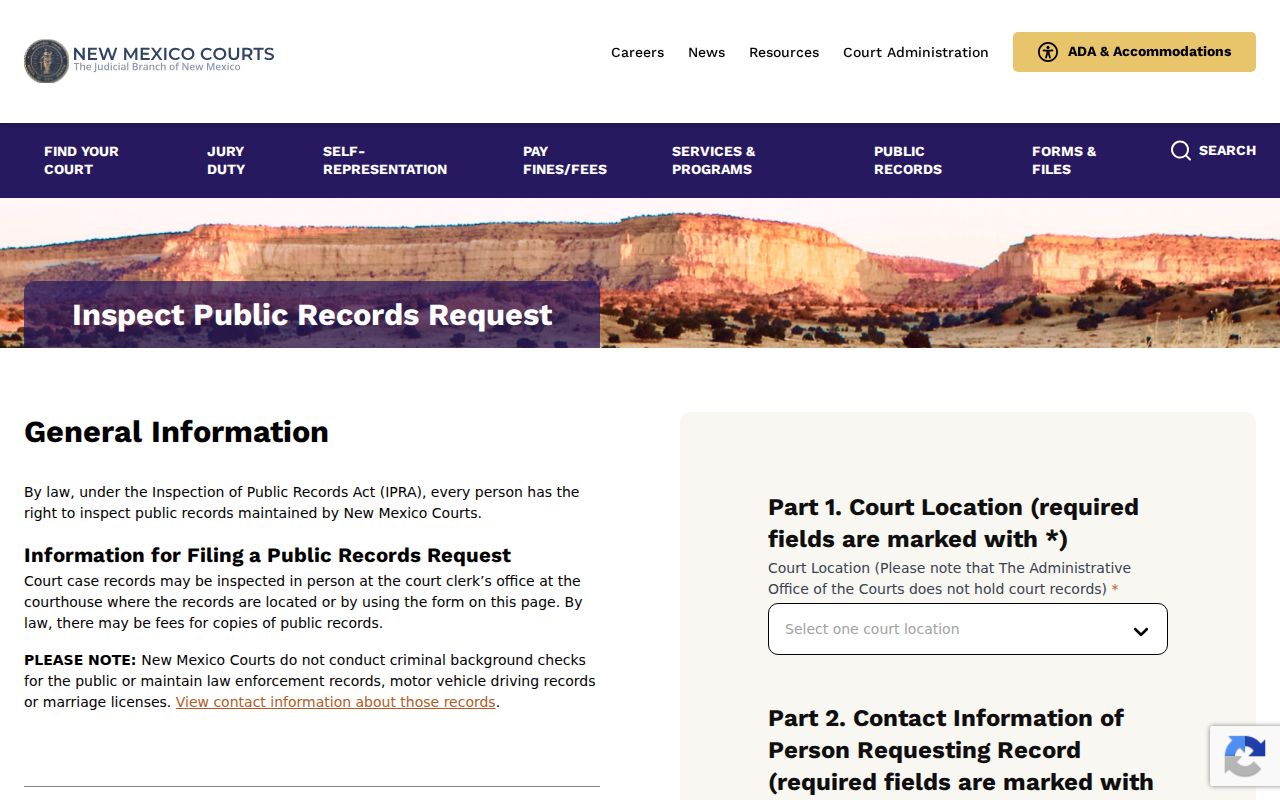
A blank Grant County form frame shows how an existing record opens, not whether an active warrant stands today.
The $100 Grant Bench-Warrant Note
The 2025 Form 9-212C note names a $100 magistrate bench-warrant fee under NMSA 35-6-5. A municipal court lacking authority to assess it must modify the form. In Grant County, that fee sits apart from bond, fines, court costs, restitution, and probation fees.
Ask for a breakdown: Confirm the court, fee category, payment method, and whether payment changes the warrant status or only satisfies a financial obligation.
Lead-in: the 2025 approved amendments provide the dated court-form context.
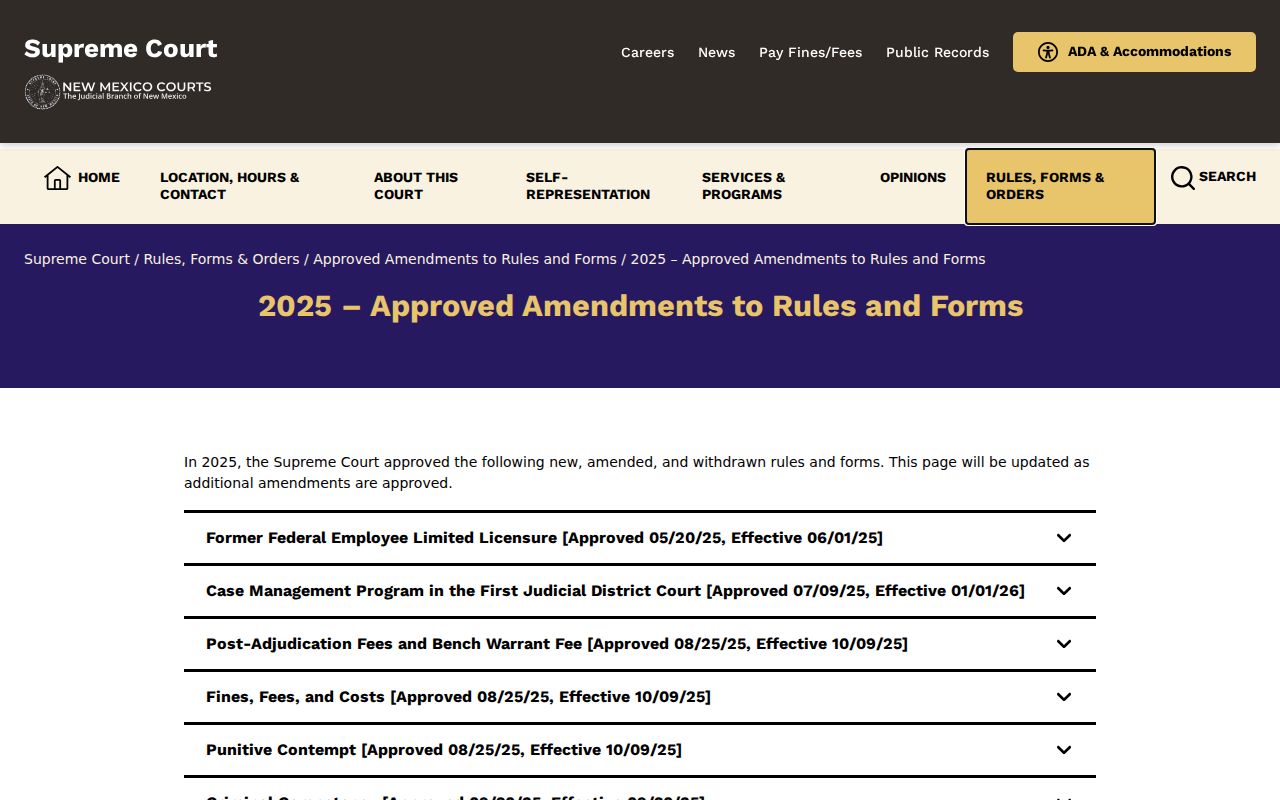
The amendment frame is context for the form note, not a completed person’s record.
Payment May Not Resolve Every Issue
Paying online or at the court may settle a financial obligation while leaving a probation, contempt, release-condition, or separate warrant matter untouched. The Case Lookup notice tells anyone with an active warrant or other obligation to follow up with the court directly. Grant County callers should press for four answers: what amount is due, what court action remains, whether a judge appearance is required, and how final status gets confirmed. A payment screen cannot answer any of that. When custody is involved, Corrections at 575-534-3803 can help with booking or bond routing, though detention staff never decide whether a court recalls or quashes a warrant.
Resolving a Grant County Bench Warrant
Only the issuing court or authorized court process can recall, quash, satisfy, or clear a Grant County bench warrant. Call the court named on the citation or docket. Ask whether counsel, a motion, a new appearance, payment, bond, or surrender is required. Ask what identification and case documents to bring.
Before surrender: Ask where to go, whether the court accepts a walk-in, what release process applies, and what record will show the warrant was removed.
The Grant County Sheriff's Office at 575-574-0100 and central dispatch at 575-388-8840 can route service questions. Neither replaces the issuing clerk. An attorney helps when it is unclear whether a voluntary appearance will trigger custody.
Which Grant County Court Issued It
Where the case sits decides where you call. Grant County District Court, at the courthouse, takes felony and general criminal cases. Magistrate I in Silver City and Magistrate II in Bayard handle state misdemeanor, DWI, traffic, and preliminary-hearing matters. City cases belong to the Silver City, Bayard, Santa Clara, and Hurley municipal courts.
Magistrate Division I
575-538-3811
Silver City lower-court cases
Magistrate Division II
575-537-3042
Bayard lower-court cases
The elected Grant County clerk is not the criminal-case clerk here. Check the court name on the citation before dialing.
Court Controls Grant Warrant Recall
A jail holds and releases people, but only on the court's direction. A sheriff employee can pass along service details. A records staffer can hand over an existing nonexempt document. None of that, alone, means a Grant County warrant has been recalled. Only the issuing court can quash it. For a copy, file Grant County's GC-PRP-1 request or the New Mexico Courts IPRA form. List the court, case number, record type, and date range. You can ask for a completed docket or return, though sensitive fields may be withheld. Follow the New Mexico Courts IPRA instructions to fill in the court location and department fields. That request gets you a record in Grant County; it does not clear the warrant.